
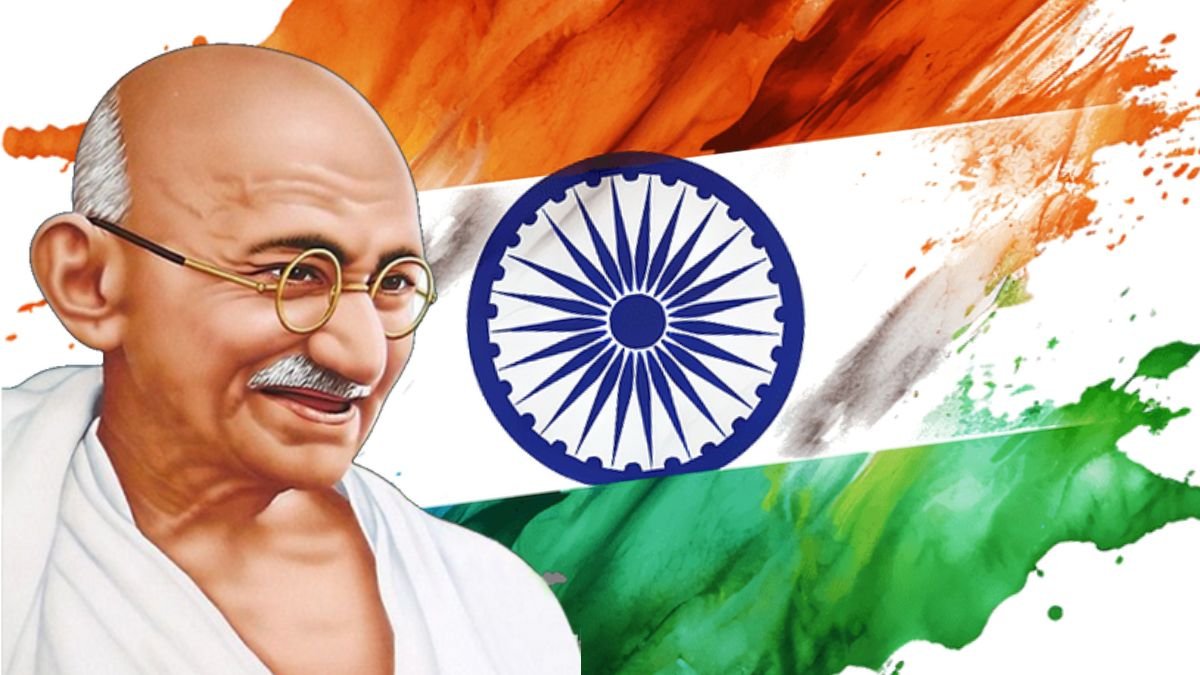
Mahatma Gandhi’s full name was Mohandas Karamchand Gandhi . He was born on October 2, 1869 , in Porbandar, Gujarat. His father, Karamchand Gandhi, was the Diwan (chief official) of Porbandar, while his mother, Putlibai , was an ideal woman of religious and simple living. From childhood, Gandhi was deeply imbued with moral and religious values by his parents and family. Truth, righteousness, and simple living were highly valued in his home, and this influenced his life. Gandhi’s childhood was a quiet and restrained one, in which he imbibed values such as tolerance, honesty, and compassion .
Education

Mahatma Gandhi received his early education at the local school in Porbandar . He then completed his secondary education in Rajkot . To further strengthen his career, he went to England in 1888 at the age of 18. There, he studied law and prepared to become a lawyer. His studies in England were not limited to law; he also studied Christianity, English literature, and the art of reasoning .
During this time, he gained considerable mental and intellectual maturity, which later strengthened his vision for leadership and social reform .
Marriage and family life
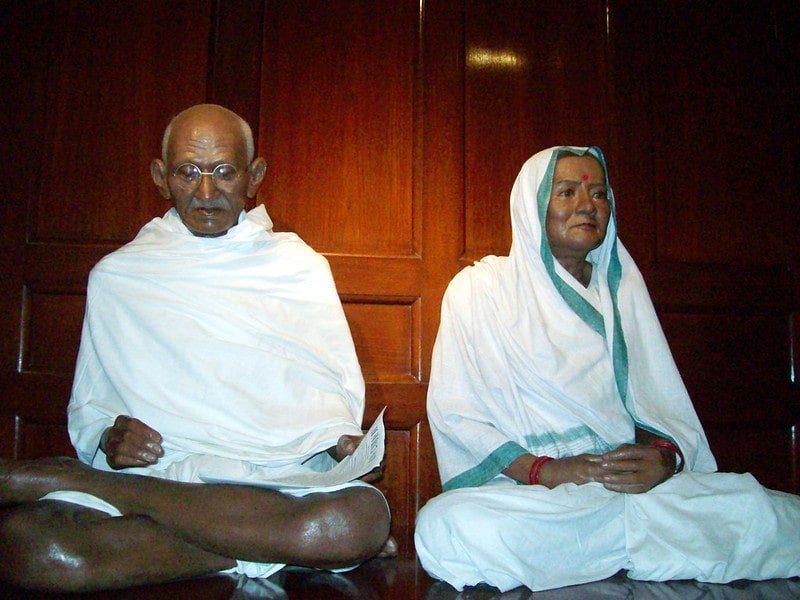
Mahatma Gandhi married Kasturba Gandhi at a very young age , at the age of 13. Kasturba Gandhi was not only his wife but also a pillar of support and help in his life . Gandhi and Kasturba had four sons – Harilal, Manilal, Ramdas, and Devdas . Their family life was characterized by simplicity, discipline, and piety . Gandhi upheld the same values of truth and nonviolence in his home that he promoted in society.
Early career
In 1891, Mahatma Gandhi returned to India and began practicing law. However, his legal practice did not achieve the success he had hoped for. Facing this lack of success, he went to South Africa in 1893. In South Africa, he witnessed the discrimination and injustice faced by Indians. This experience profoundly transformed Gandhi’s life and thinking.
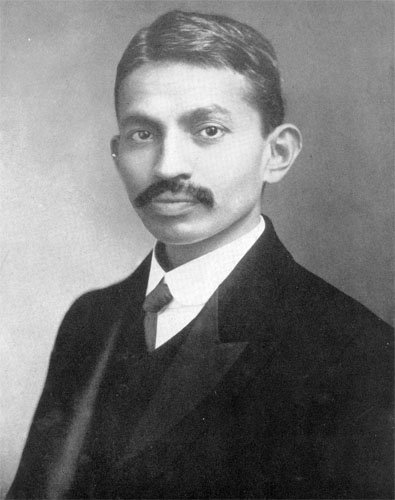
He initiated the Satyagraha and nonviolence movement, fighting for the rights of Indians in South Africa. This was his first major social and political struggle, establishing him as a leading figure in the fight for India’s independence .
Participation in movements
Mahatma Gandhi launched several important movements that proved to be milestones in India’s independence:
- Struggle in South Africa (1893–1914):
- Fighting for justice and equality for Indians.
- He was the first to use Satyagraha (non-violent protest) .
- Example: Protest against passports and casteism.
- Movement in India:
- 1915: Returned to India.
- 1919: Protest against Rowlatt Act → Peaceful movement
- 1920–22: Non-cooperation movement → boycott of British clothes, boycott of government schools
- 1930: Salt Satyagraha (Dandi March) → protest against the British salt tax
- 1942: Quit India Movement → Demand for immediate independence
1. Opposition to the Rowlatt Act (1919)
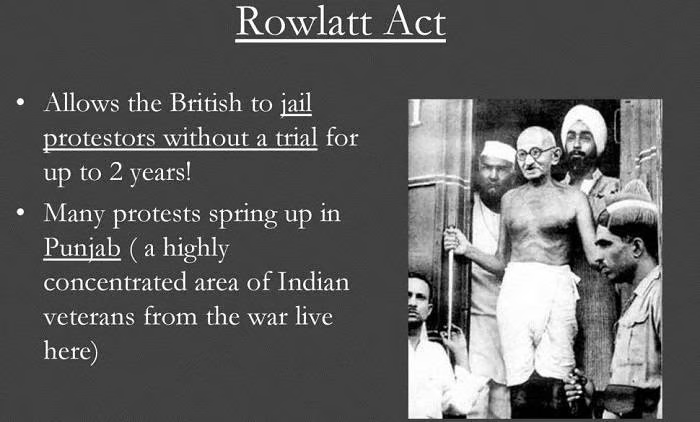
In 1919, the British government implemented the Rowlatt Act in India . Under this law, any Indian could be imprisoned without a proper trial. This law was extremely humiliating and unjust to the Indian people. Mahatma Gandhi led peaceful protests against this law.
He inspired people to protest through Satyagraha . He believed that non-violence was the most powerful weapon and that injustice could be defeated through it. This movement put pressure on the British government and established Gandhi as a popular leader throughout India. Although violence occurred in some areas, the movement’s significance is still remembered today as an example of Satyagraha and non-violence .
2. Non-cooperation movement (1920–1922)
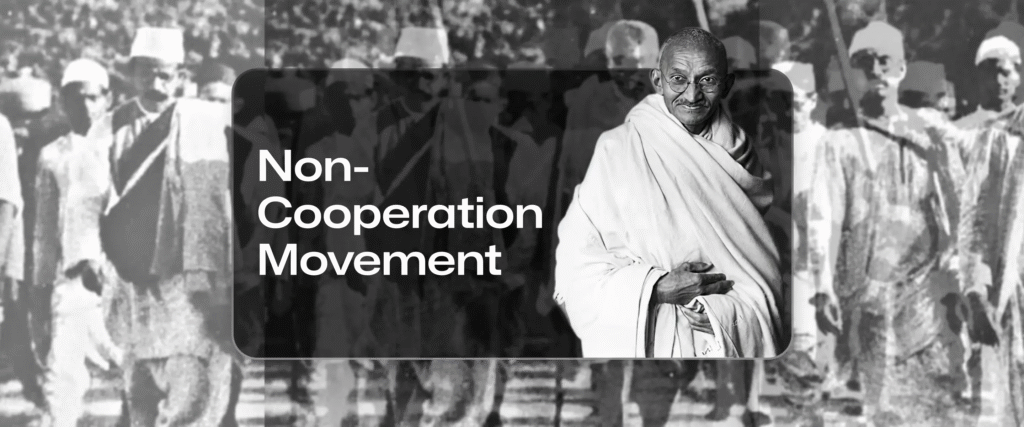
Mahatma Gandhi’s first major national movement was the Non-Cooperation Movement . Its purpose was to express widespread dissent against British rule and demand India’s independence.
Gandhi urged the public to boycott British clothing and wear khadi . He stated that boycotting British rule in our economic and social lives would strengthen the path toward independence. He also urged people to withdraw from government schools and employment .
The movement was essentially peaceful, but violence broke out in some places. Gandhi was arrested and imprisoned in 1922. Despite this, the Non-Cooperation Movement united the Indian people and highlighted the importance of Satyagraha and non-violence in the freedom struggle.
3. Salt Satyagraha / Dandi March (1930)
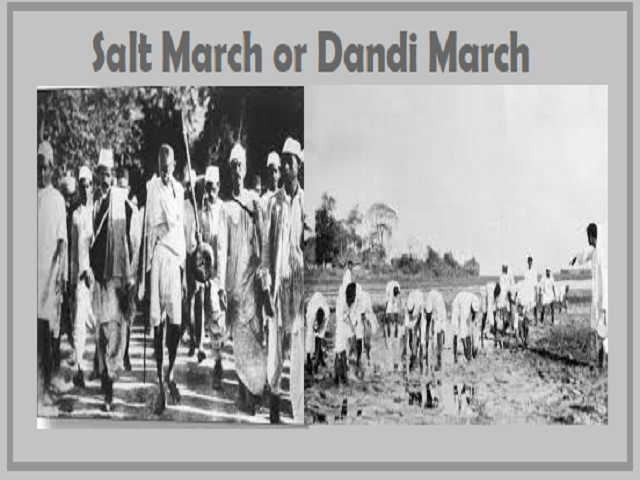
In 1930, Mahatma Gandhi led a historic movement against the British salt tax , known as the Dandi March . The British government had imposed a salt tax on the general public, severely impacting the lives of the poor.
Gandhi began his 240-mile march on foot from Sabarmati Ashram on March 12, 1930 , and reached Dandi on April 6 to make salt from sea water. It was a peaceful protest, but its political and social implications were enormous.
Gandhiji called it a symbol of Satyagraha , and people across the country participated in the movement. The Salt Satyagraha not only put pressure on the British government but also brought Gandhiji national and international fame . This movement proved that major political revolutions are possible through peace and nonviolence.
4. Quit India Movement (1942)
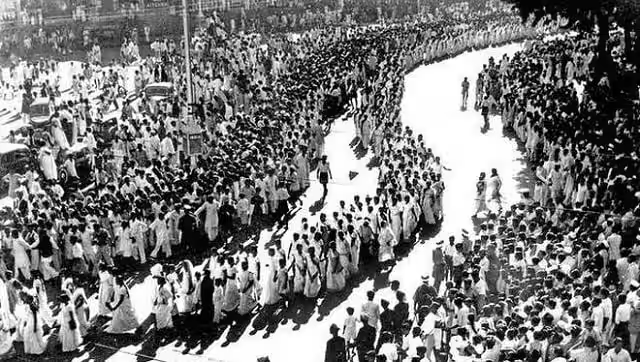
During World War II, Mahatma Gandhi announced the Quit India Movement on 8 August 1942, demanding the immediate withdrawal of British rule from India .
The main objective of this movement was to end British rule and achieve immediate independence for India . Gandhi appealed to his countrymen to protest peacefully and not obey the orders of the British government.
The British administration took this seriously and arrested and imprisoned many leaders, including Gandhiji. During the movement, there were protests at many places, and some violence also occurred. Nevertheless, the movement gave new energy and direction to the freedom struggle. As a result, India became independent on August 15, 1947.
Importance of Mahatma Gandhi’s movements
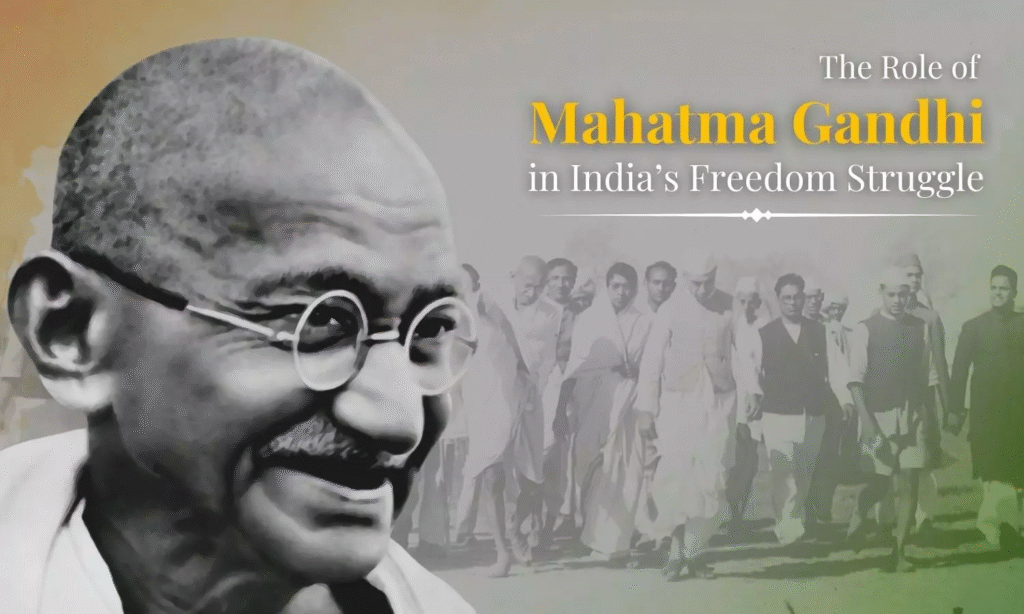
Mahatma Gandhi’s movements not only brought about political change, but also established a model of morality, equality, and nonviolence in society. His life teaches us that great change is possible by following the path of peace and truth.
- He showed the power of protest through Satyagraha and non-violence .
- United the people for equality and freedom .
- Fought for the rights of the poor and Dalits.
- Helped in making India strong and self-reliant .
Gandhi’s life continues to inspire leaders and ordinary people around the world . His movements demonstrate that following the path of patience, nonviolence, and truth can bring about extraordinary changes in society and the nation
Ideas and ideals
- Truth and non-violence: His life was based on truth and non-violence.
- Simple living: simple food, wearing khadi, cleanliness.
- Social reforms: Worked against untouchability, child marriage and poverty.
Contribution to India’s independence
- Mahatma Gandhi challenged British rule through peaceful and non-violent movements .
- Under his leadership, India became independent on 15 August 1947.
Death
- Assassinated: January 30, 1948
- Location: Delhi, India
- Assassin: Nathuram Godse
- Gandhiji’s assassination shook the entire country and the world.
Key facts about Mahatma Gandhi
| Subject | Description |
|---|---|
| Birth | October 2, 1869, Porbandar, Gujarat |
| Parents | Karamchand Gandhi and Putlibai |
| Wife | Kasturba Gandhi |
| Children | 4 sons – Harilal, Manilal, Ramdas, Devdas |
| Education | Porbandar, Rajkot, England (Law) |
| Movement | Satyagraha, Non-cooperation, Salt Satyagraha, Quit India Movement |
| Ideal | Truth, non-violence, simple living, social reform |
| Death | 30 January 1948, Delhi |
#GandhiJayanti #MahatmaGandhi #FatherOfTheNation #GandhiLegacy #TributeToGandhi #GandhiTeachings #Carrerbook#Anslation#Bapu #Satyagraha #QuitIndiaMovement #SaltMarch #NonViolence #
Leave a Reply