
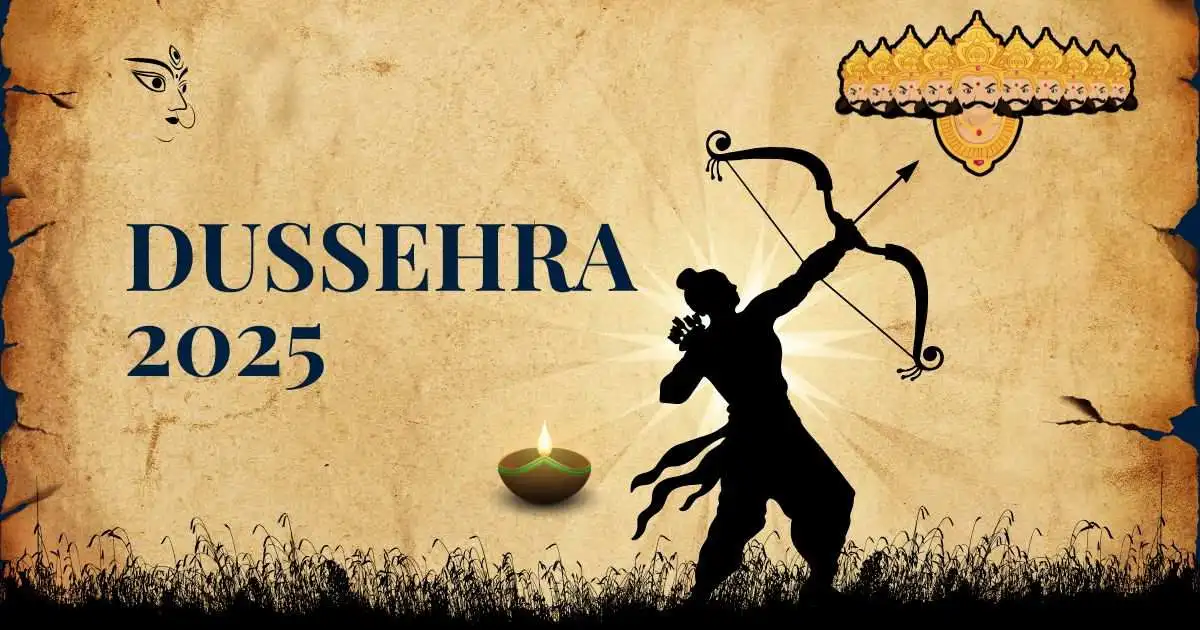
Dussehra, also known as Vijayadashami , is a major and extremely important festival in Hinduism. It is celebrated every year on the tenth day of the bright fortnight (Shukla Paksha) of the month of Ashwin . Dussehra is primarily celebrated to symbolize the victory of good over evil . The festival is celebrated in various forms and legends across India, but its core message remains the same—truth and righteousness always prevail, and evil is sure to be vanquished. Dussehra teaches us that no matter how difficult the circumstances, if we follow the path of righteousness, justice, and truth, success is certain.
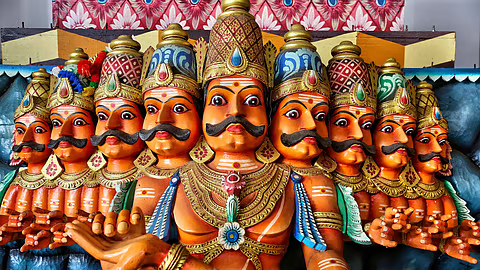
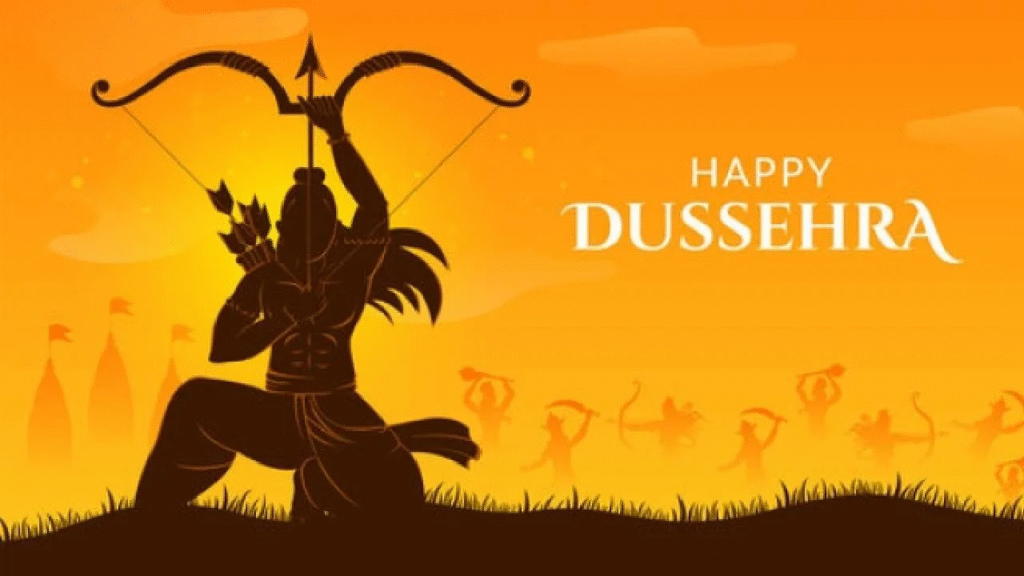
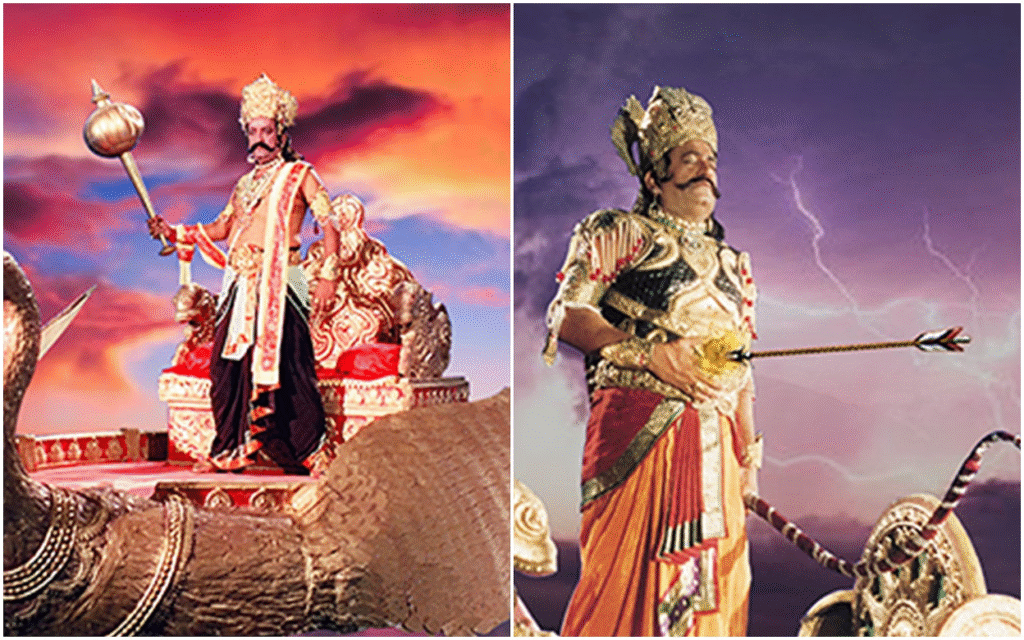
In North India, Dussehra is primarily celebrated to commemorate the killing of Ravana by Lord Rama . According to the Ramayana, Ravana had kidnapped Sita. In search of Sita, Lord Rama, along with his brother Lakshmana and the monkey army, invaded Lanka. In the battle between Ravana and Rama, Rama killed Ravana with his courage, wisdom, and devotion. The day of Ravana’s killing falls on the Dashami Tithi, hence the name Dussehra. This day is not only a part of the Ramayana story, but has also become a symbol of the struggle between Dharma and Adharma and the victory of Dharma . The burning of Ravana symbolizes that evil is always doomed and good always triumphs.
When and why is Dussehra celebrated?
Dussehra, also known as Vijayadashami , is celebrated on the tenth day of the bright fortnight (Shukla Paksha) of the month of Ashwin (Ashvina ) according to the Hindu calendar. This festival primarily symbolizes the victory of good over evil .
- In North India : It is celebrated to commemorate the killing of Ravana by Lord Rama.
- In Eastern and other parts : It is celebrated to commemorate the victory of Goddess Durga over the demon Mahishasura.

In other parts of India, particularly in Eastern India and West Bengal, Dussehra is celebrated
to commemorate the killing of Mahishasura by Goddess Durga . The nine days of Navratri are dedicated to the worship of the nine forms of Goddess Durga. Each day involves worshipping a different form of the Goddess, chanting mantras, and offering special offerings. On the tenth day, Vijayadashami, Goddess Durga killed the demon Mahishasura, ensuring the victory of good over evil.
Thus, Dussehra is not limited to the story of the Ramayana, but also symbolizesthe power and victorious energy of Goddess Durga . The religious significance of this day is that it reminds us that no matter how powerful evil may be, if our loyalty, courage, and devotion are true, good will always triumph.
Religious and mythological significance of Dussehra
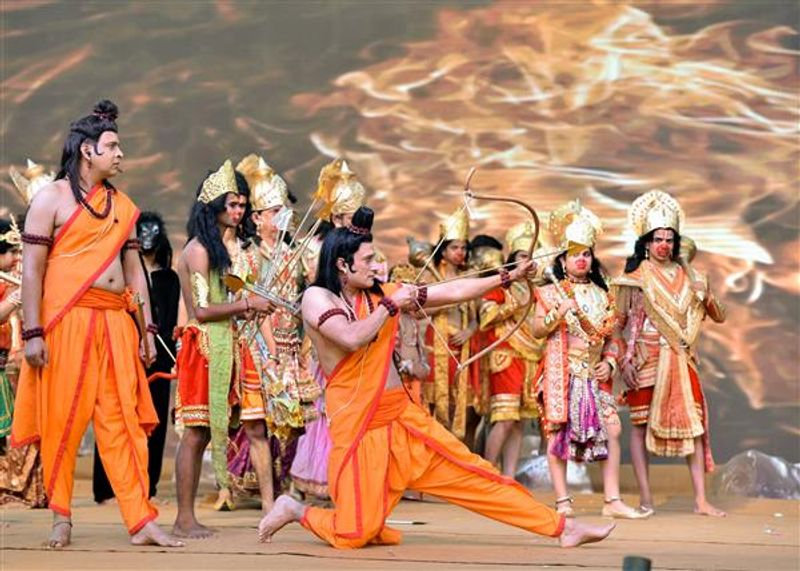
A variety of traditions and customs are observed in different parts of India during Dussehra. The most prominent event is
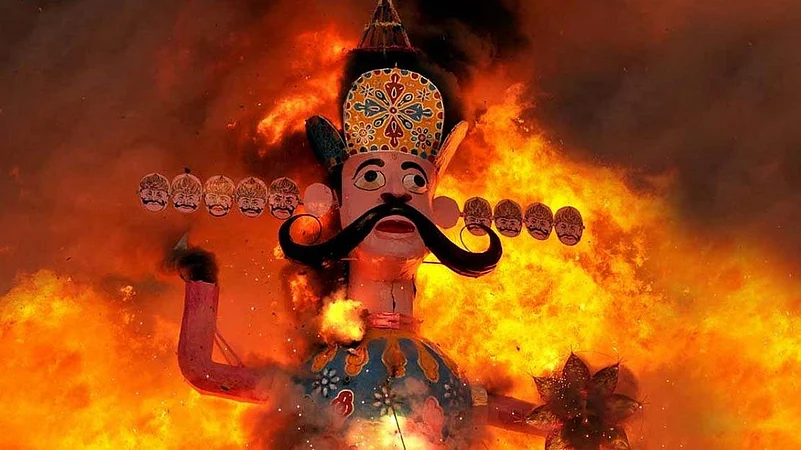
Ramlila , in which the story of Rama and Ravana is enacted on stage. Ramlila is not only a source of entertainment but also inspires children and youth to follow the path of morality, righteousness, and truth. At the end of Ramlila, effigies of Ravana, Meghnath, and Kumbhakarna are made and burned. This
Ravana Dahan symbolizes the destruction of evil and the victory of good. This tradition is celebrated with great enthusiasm across the country, and large numbers of people gather to witness it. The atmosphere during Ravana Dahan is clearly filled with excitement, joy, and a sense of victory.
Story related to Ramayana
- Ravana kidnapped Mother Sita.
- Lord Rama killed Ravana with his devotion, courage and intelligence.
- The day of Ravana’s killing was called Dussehra because of the Dashami date.
- This day symbolizes the victory of Dharma and the defeat of Adharma .
Story related to Goddess Durga
- Nine forms of Goddess Durga are worshipped for nine days during Navratri.
- On the tenth day, i.e. Vijayadashami, Goddess Durga killed Mahishasura.
- Therefore, it is also considered the day of victory of Mother Durga .
Traditions and customs of Dussehra
- Organising Ramlila
- Ramlila is staged all over India.
- The story of Ram and Ravana is depicted.
- Ravana Dahan
- Effigies of Ravana, Meghnath and Kumbhakarna are made and set on fire.
- It symbolizes the destruction of evil and the victory of good .
- Worship of Goddess Durga and Navratri
- Nine forms of the Goddess are worshipped during the nine days of Navratri.
- Every day has different significance of offerings and fasts.
- Good luck and new beginnings
- People start new work on the day of Dussehra.
- It is considered auspicious for business, education or other important work.
Social significance of Dussehra
The festival of Dussehra is not limited to religious and cultural significance, but also holds immense social significance . This day spreads the message of unity, brotherhood, and collective celebration in society. Fairs, cultural programs, and Ramlila are organized to bring people together to enjoy the festival. It also provides an opportunity to spend time with family and friends, meet new people, and strengthen social bonds. During Dussehra, people decorate their homes, temples, and public places, thus spreading happiness and positive energy in society.
- This festival is also a symbol of social unity .
- People come together to enjoy the festival through fairs, events and cultural programs.
- Strengthens the sense of virtue, morality and religion among children, youth and adults .
The message of Dussehra
In short, Dussehra is not just a religious festival, but a life-giving guiding force . It teaches us that no matter how strong evil may be, if our loyalty, patience, and devotion are true, good will always triumph. This festival inspires us to follow truth, morality, and dharma in our lives. The burning of Ravana, the enactment of Ramlila, and the worship of Goddess Durga on Dussehra symbolize
the victory of good over evil . This festival also connects us socially, culturally, and spiritually, infusing positive energy and hope into our lives.
- Evil is never permanent.
- Truth, righteousness and goodness always prevail.
- Patience, courage and following truth brings success in life.
In short
Thus, Dussehra is a festival thatseamlessly blends religious narrative, cultural celebration, and social message . It not only keeps our traditions and history alive, but also teaches the values of morality, patience, courage, and goodness in life. Dussehra always reminds us that truth will always triumph , and no matter how powerful evil may be, it will ultimately be destroyed. This is why Dussehra is celebrated with great joy and devotion every year.
Dussehra:
- Religious: Story of Rama and Ravana, Victory of Goddess Durga.
- Cultural: Ramlila, Ravana Dahan, fairs and festivals.
- Social: Victory of good over evil, message of morality.
- Personal: Auspicious day to start new work.
#Dussehra #Vijayadashami #Dussehra2025 #Ramleela #Ravandahan #Madurga #VictoryofGoodness #Carrerbook#Anslation#VictoryofReligion #Navratri #FestivalsOfIndia #HinduFestivals #Spirituality #Tradition #Culture #PositiveVibes #GoodOverEvil #ReligiousFestival #IndianCulture #FestiveVibes #Celebration
Leave a Reply