
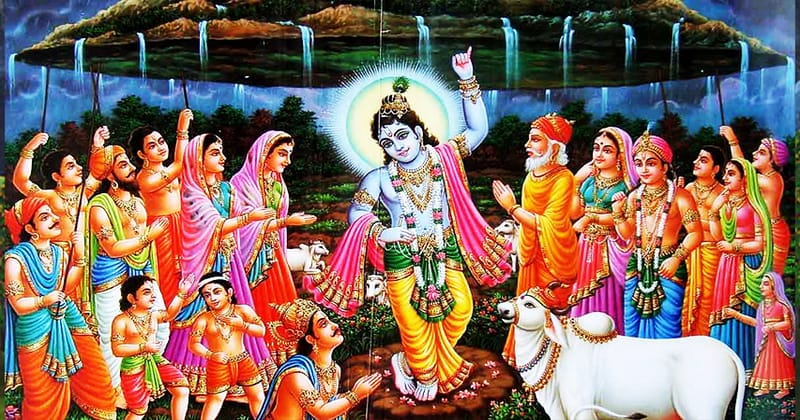
Goverdhan Puja, also known as Annakut Puja, is a vibrant Hindu festival celebrated right after Diwali. It’s a day dedicated to Lord Krishna, commemorating his legendary victory over Indra and the protection he offered to the residents of Gokul by lifting the mighty Goverdhan Hill.
Celebrating this puja at home is a beautiful way to honor nature, express gratitude to Lord Krishna, and seek his blessings for prosperity and well-being. If you’re wondering how to conduct this special ritual, you’re in the right place! We’ve put together a simple, step-by-step guide to help you perform a meaningful Goverdhan Puja in your own home.
Getting Ready: Pre-Puja Preparation
Before you begin the main rituals, a little groundwork is essential to ensure a smooth and blessed puja.
- Clean and Purify: Just like any other major festival, start by thoroughly cleaning the area where you plan to perform the puja. A clean space symbolizes a pure heart ready to welcome the divine.
- Gather Your Supplies (Samagri): Make sure you have everything ready a day before. Essential items include an idol or picture of Lord Krishna, incense sticks, a lamp (diya), cotton wicks, ghee, fresh flowers, kumkum (vermilion), akshat (rice grains), fruits, and milk.
- The ‘Annakut’ Offering: This is the most distinctive part of the puja. Annakut literally means a “mountain of food.” Traditionally, devotees prepare a variety of vegetarian dishes—often 56 (chappan bhog)—but don’t stress! Even 5, 7, or 11 different dishes are perfect and acceptable. The idea is to offer a diverse feast to the Lord.
Step-by-Step: Performing the Goverdhan Puja Ritual
1. Creating the Goverdhan Hill (Go-Mata)
The central focus of this festival is the hill itself, often represented by cow dung (Gobar).
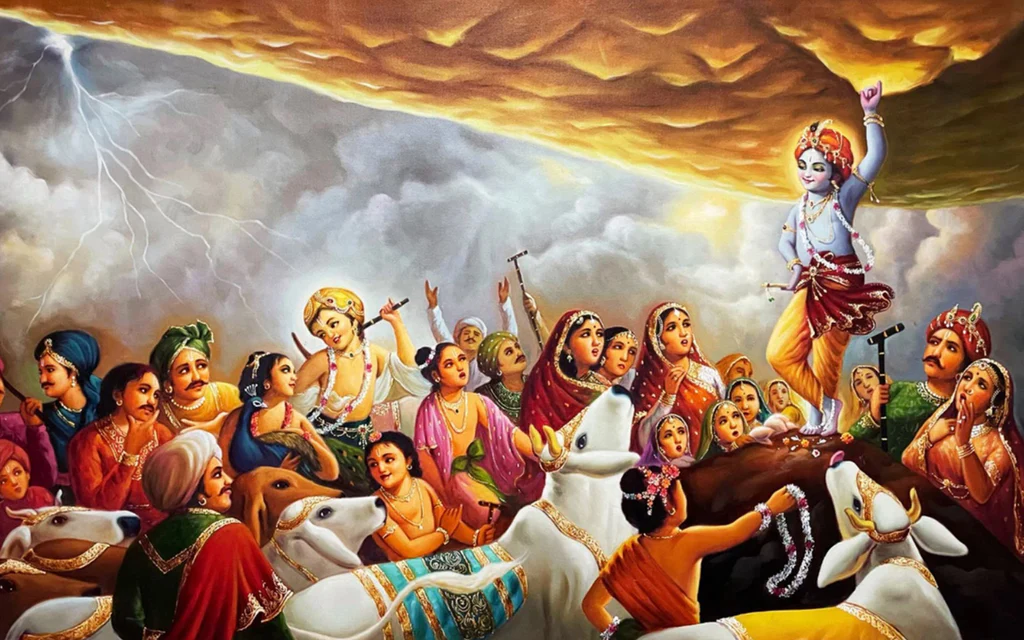
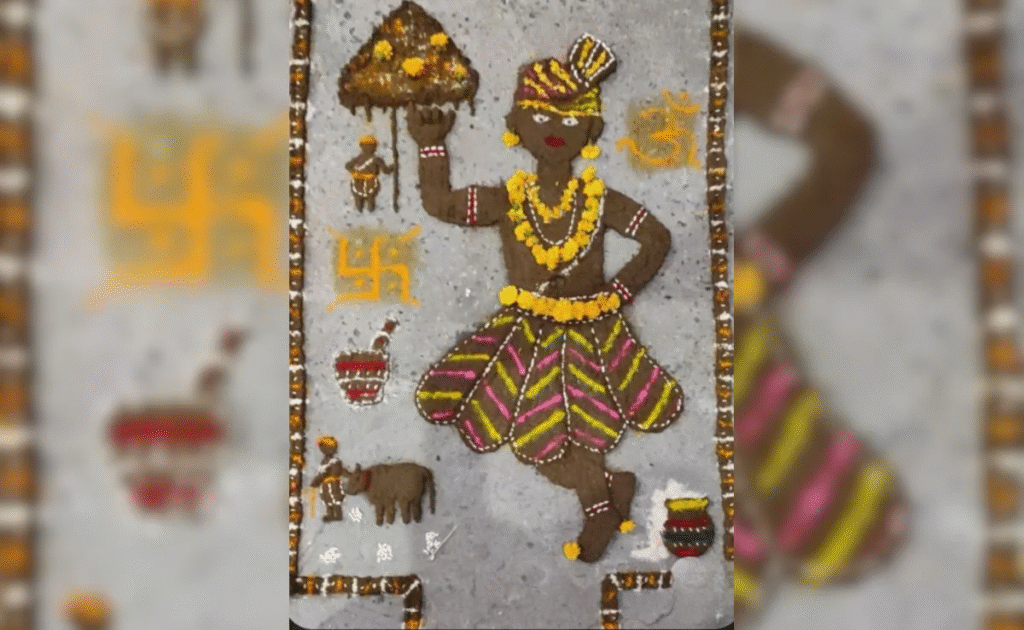
- The Structure: On the purified floor, usually near your main altar, use cow dung to mold a miniature hill-like structure. This represents the Goverdhan Parvat lifted by Krishna.
- Decoration: Decorate the mound with flowers, Tulsi leaves, and small flags. You can also use colorful powders (rangoli) to make it look festive.
- Symbolic Figures: On or around the hill, place small figures made of cow dung or clay to represent Krishna, the cows, and the villagers, symbolizing everyone protected by the Lord. This step helps to bring the story to life and makes the ritual more engaging, especially for children.
2. The Formal Worship (Sankalp and Puja)
Once the setup is complete, you move on to the actual worship.
- The Resolution (Sankalp): Light the lamp and incense. Close your eyes and state your intention (Sankalp) for performing the puja, seeking the blessings of Lord Krishna for your family.
- Water Offerings: Offer a small amount of clean water (achaman) to the deity.
- Ritual Dressings: Offer a fresh garland of flowers to the Krishna idol and the Goverdhan mound. Apply tilak (a dot of kumkum and rice) to the deity, the hill, and all family members present.
3. Circumnambulation and Prayer
This step connects directly to the tradition of people circumambulating (walking around) the real Goverdhan Hill.
- Parikrama: Walk around the Goverdhan mound you created, usually seven times, while chanting a mantra dedicated to Lord Krishna. If space is tight, you can simply offer your respects and walk seven times in place or just near the mound.
- Chanting: Recite the Goverdhan Dharan mantra or simply chant “Hare Krishna.” The vibrations from the sincere chanting help to fill your home with positive energy.
4. The Grand Annakut Offering
This is the climactic moment, presenting the great feast to the Lord.
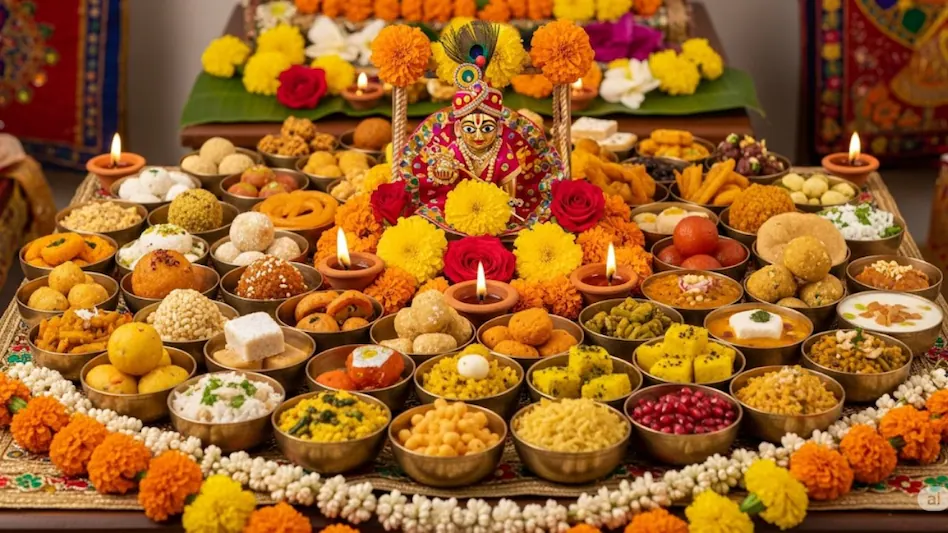
- The Presentation: Arrange all the delicious vegetarian food you’ve prepared (the Annakut) neatly in front of the Goverdhan hill and the Krishna idol.
- A Simple Insight: It’s important to remember that this offering isn’t just a physical act; it’s an expression of thanks to Lord Krishna for providing food and sustaining life throughout the year. The variety symbolizes the abundance we pray for.
- Arti: Perform the final arti (waving the lamp) while singing devotional songs (bhajans) in praise of Lord Krishna.
5. Distribution of the Prasada
The puja concludes with sharing the sanctified food.
- Sharing Blessings: Once the puja is complete, the entire Annakut offering is now considered Prasada (blessed food).
- Feast Together: Distribute this food generously among all family members, friends, and anyone else who comes by. Consuming the prasada is believed to confer blessings and good fortune. This communal feast is a wonderful way to foster family bonds and celebrate together.
#GoverdhanPooja #GoverdhanPooja2025 #AnnakutFestival #GovardhanParvat #LordKrishna#FestivalOfFaith #DivineCelebration #IndianTraditions #BhaktiVibes #PujaTime #BlessedMorning#GovardhanLeela #KrishnaPrem #RadheRadhe #GovardhanMaharajKiJai #ShreeKrishna #JaiShreeKrishna
Leave a Reply