
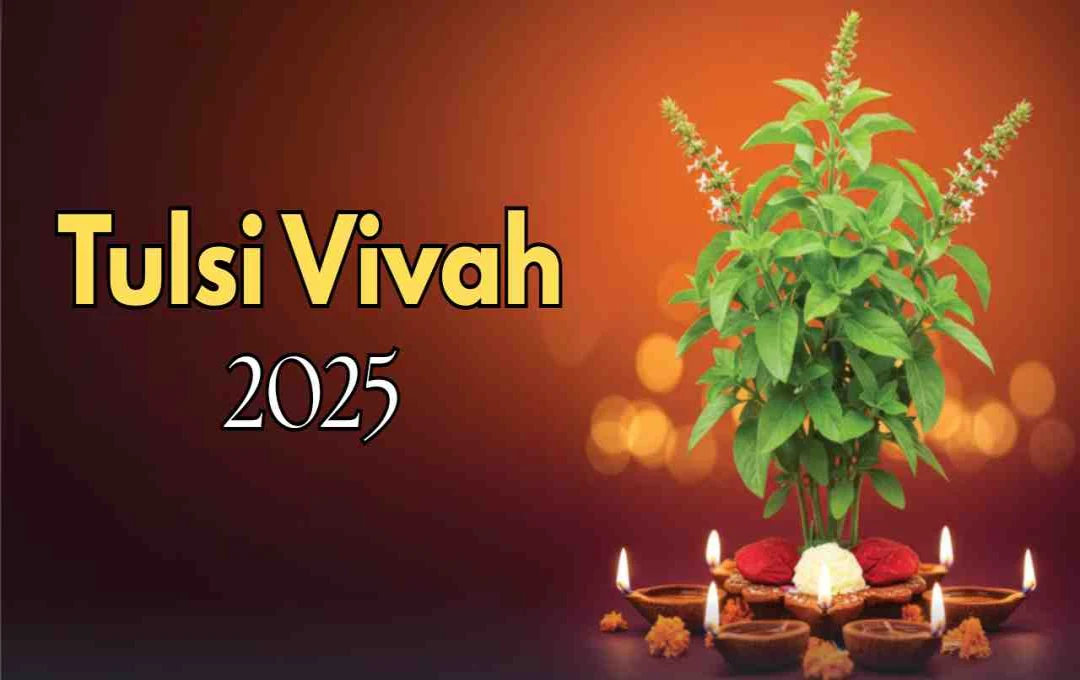
The Tulsi Vivah festival is one of the most charming and spiritually significant events in the Hindu calendar. It’s more than just a ritual; it’s a beautiful, symbolic wedding that celebrates the union of divinity and nature. This annual ceremony formally marries the sacred Tulsi plant (Holy Basil) to Lord Shaligram, an aniconic representation of Lord Vishnu.
If you’re looking for a boost of positivity, marital harmony, and general prosperity, this is one festival you’ll want to participate in!
Tulsi Vivah 2025: Date and Auspicious Timing
The timing of Tulsi Vivah is highly auspicious because it marks the end of a four-month period when major ceremonies are traditionally paused.
- Main Date for Tulsi Vivah 2025: Sunday, November 2, 2025
- The Tithi (Lunar Day): The festival is observed on the Dwadashi Tithi (12th lunar day) of the Shukla Paksha (waxing phase) in the Hindu month of Kartik.
- The Spiritual Connection: This date follows Dev Uthani Ekadashi (November 1, 2025), which is the important day when Lord Vishnu symbolically awakens from his cosmic sleep, signaling the start of the auspicious wedding season for everyone.
The Heartfelt Story Behind the Ceremony
Every ritual has a beautiful story, and the tale of Tulsi Vivah is one of ultimate devotion and transformation.
The Legend of Vrinda
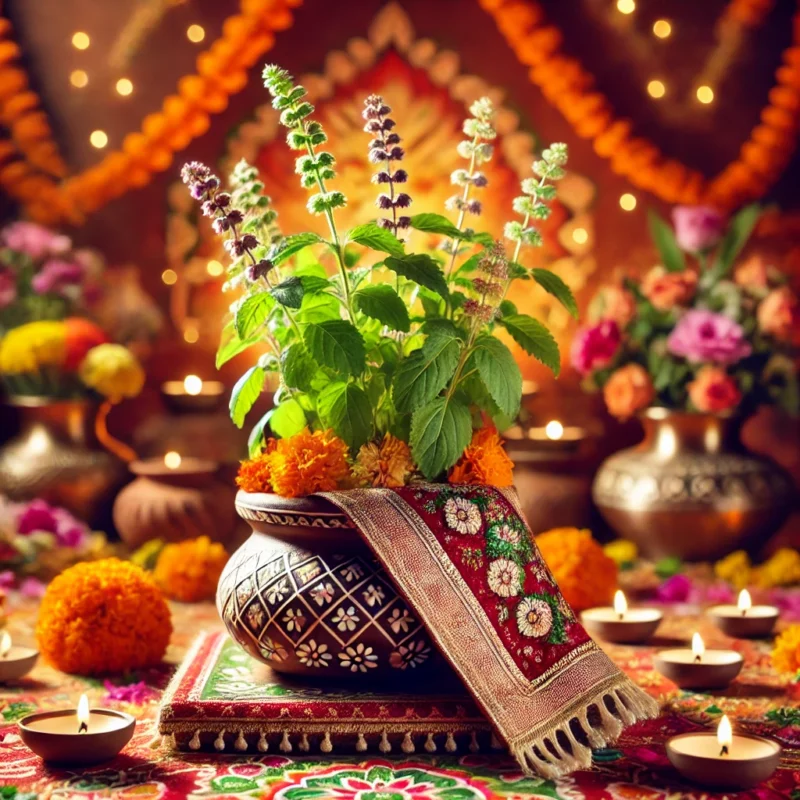
The ceremony is rooted in the legend of Vrinda, a woman of unwavering devotion and purity, married to a powerful demon king named Jalandhar. Because of Vrinda’s exceptional loyalty and chastity (Pativrata Dharma), no god could defeat her husband.
To restore cosmic order, Lord Vishnu had to intervene. He used a disguise to breach Vrinda’s chastity, which ultimately stripped her husband of his power, leading to his defeat.
Transformation and Divine Grace
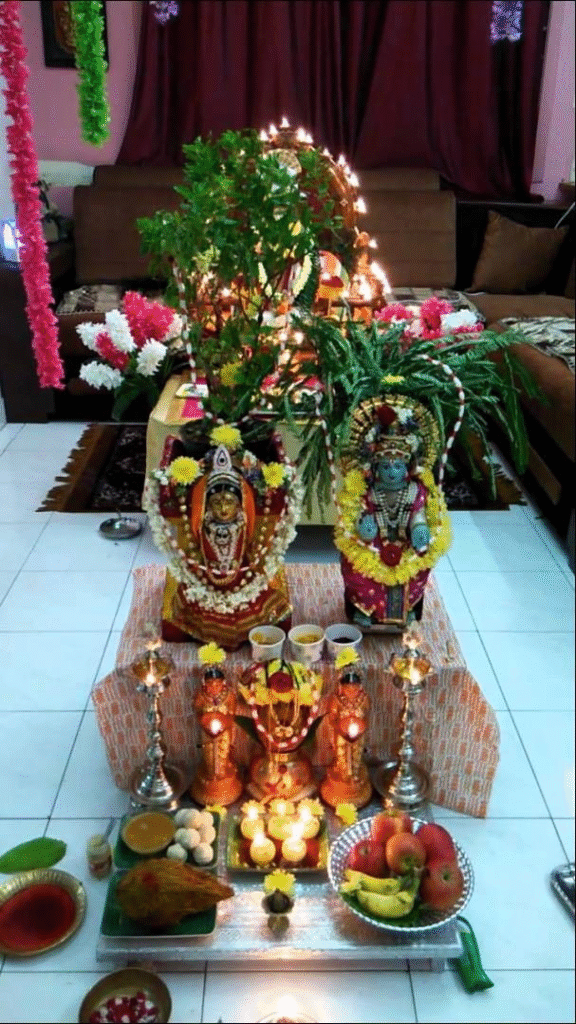
Upon learning of the deception, the heartbroken Vrinda cursed Lord Vishnu to become a stone (which is now revered as the Shaligram). She then sacrificed her own life. Out of compassion and respect for her immense devotion, Lord Vishnu granted her a boon: she would be reborn as the most sacred plant on Earth, the Tulsi, and he promised to marry her in this new form.
This divine marriage is what we celebrate as Tulsi Vivah. It teaches us that true devotion, even in the face of immense tragedy, is never lost; it simply transforms into a higher state of being.
How to Host the Divine Wedding at Home
Many families treat Tulsi Vivah with the same care and joy as a real human wedding. It’s a wonderful way to bring family members together.
1. Preparations (Getting the ‘Bride’ and ‘Groom’ Ready)
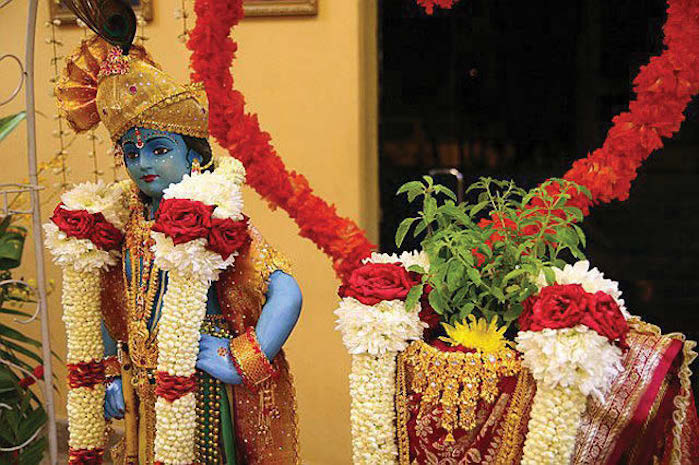
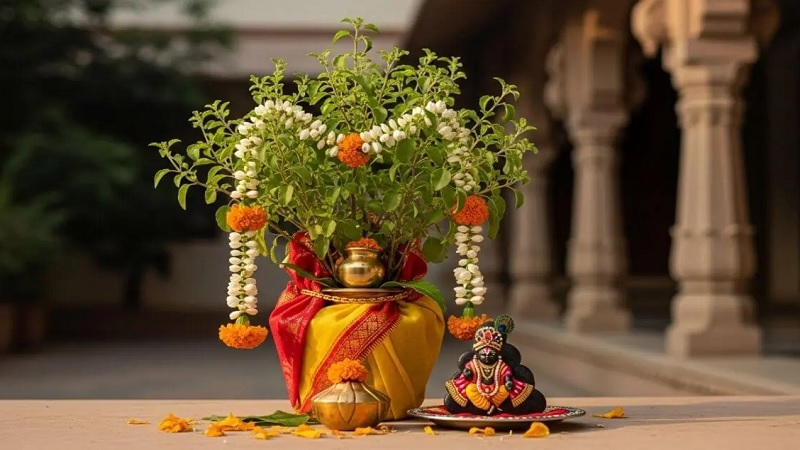
- The Mandap: The Tulsi plant is placed in a clean area, often the courtyard or balcony. A small wedding canopy (mandap) is created around it, decorated with sugarcane stalks, marigold flowers, banana leaves, and bright fabrics.
- Adorning the Tulsi Bride: The Tulsi pot is beautifully cleaned, and the plant is adorned with a red sari or chunari, bangles, a nose ring (nath), and bindi.
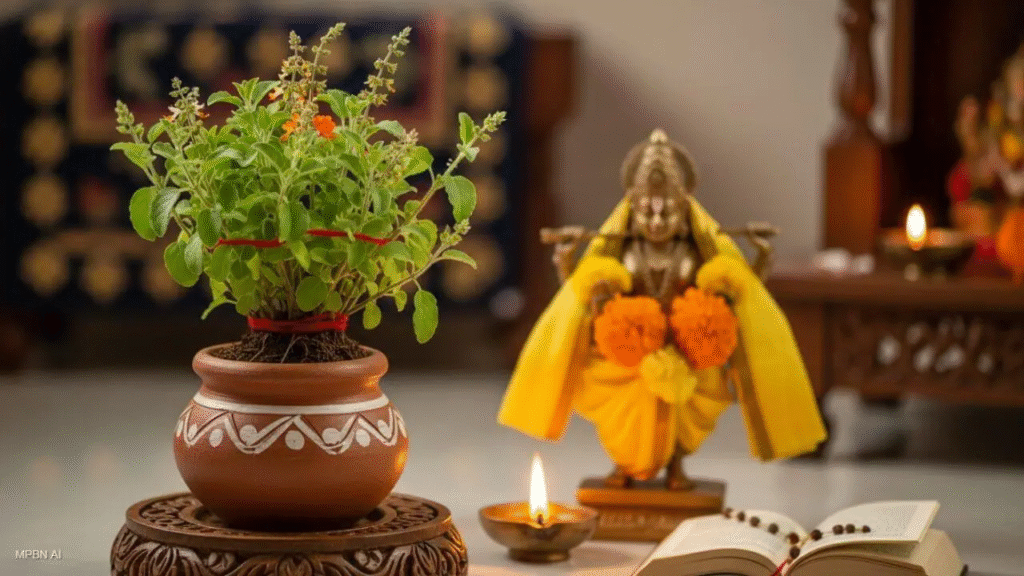
- Dressing the Shaligram Groom: The Shaligram stone or a small idol of Lord Vishnu/Krishna is bathed, dressed in a dhoti, and placed next to the Tulsi.
2. The Ceremony
The ritual follows a traditional Hindu wedding structure:
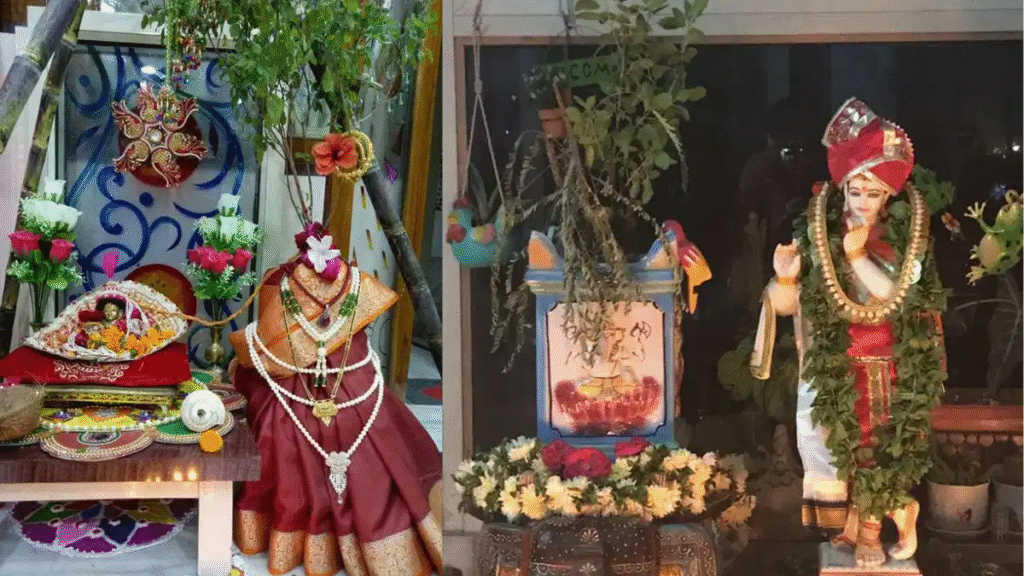
- The Offerings (Bhog): Offerings of seasonal fruits, sugarcane, coconut, and especially vegetarian food (satvik bhog) are made. A key rule: every single offering to Lord Vishnu must include a Tulsi leaf for it to be accepted.
- The Kanyadaan: The family that hosts the ceremony symbolically performs Kanyadaan (the ritual of giving away the bride), praying for the blessings of Lord Vishnu.
- Tying the Knot: A sacred yellow thread (mangal sutra or similar symbolic thread) is tied between the Tulsi plant and the Shaligram to signify their marital bond. The traditional seven rounds (pheras) are sometimes performed by rotating the Shaligram around the Tulsi pot.
- Aarti and Prasad: The ceremony concludes with the singing of devotional hymns (bhajans), the waving of lamps (Aarti), and the distribution of the sweet food (prasad) to all present.
Why This Festival Brings Prosperity
The benefits of sincerely performing or witnessing Tulsi Vivah are profound:
- Marital Harmony and Blessings: Observing the wedding is believed to grant immense blessings for a happy, peaceful, and harmonious married life. If you are single, it is said to help you find an equitable and loving partner.
- Attraction of Wealth: Since Tulsi is considered an incarnation of Goddess Lakshmi (the Goddess of Wealth), her union with Lord Vishnu (the Preserver) brings the combined blessings of stability and prosperity to the household.
- Spiritual Renewal: The festival signifies the reawakening of auspicious times. It encourages you to shake off any spiritual sluggishness and begin new ventures, both material and spiritual, with fresh energy and devotion.
Tulsi Vivah is a heartwarming reminder that even the simplest act of devotion, represented by a humble plant, can lead to eternal and divine union.
| Category | Detail |
| Name of Festival | Tulsi Vivah (The Marriage of Holy Basil) |
| Main Date in 2025 | Sunday, November 2, 2025 |
| Hindu Month (Maas) | Kartik Month |
| Phase | Shukla Paksha (Waxing Phase of the Moon) |
| Lunar Day (Tithi) | Dwadashi (The Twelfth Lunar Day) |
| Auspicious Significance | Marks the official end of Chaturmas and the beginning of the Hindu wedding season. |
| Divine Union | Tulsi Mata (Incarnation of Goddess Lakshmi) and Shaligram Ji (Form of Lord Vishnu). |
| Primary Benefit | Blessings for marital happiness, prosperity, and family harmony. |
| Astrological Note (2025) | The festival coincides with the transit of Venus (Shukra) into its powerful sign, Libra. |
Tulsi Vivah 2025: Auspicious Timings (Muhurat)
| Name of Muhurat | Time (On November 2, 2025) | Significance |
| Dwadashi Tithi Begins | 07:31 AM | The lunar day for performing the Vivah ritual commences. |
| Brahma Muhurat | 04:50 AM to 05:42 AM | Highly sacred for early morning bathing, meditation, and taking the Sankalp (vow). |
| Amrit Kaal | 09:29 AM to 11:00 AM | Considered the most favorable time for starting any religious or spiritual activity. |
| Abhijit Muhurat | 11:42 AM to 12:26 PM | The most powerful 45-minute window of the day; ideal for commencing the ceremony. |
| Godhuli Muhurat | 05:35 PM to 06:01 PM | The traditional twilight hour; considered the most important time for performing the evening marriage rituals. |
#TulsiVivah #TulsiVivah2025 #HinduFestival#Carrerbook#Anslation #TulsiPuja #TulsiVivahRituals #HinduTradition #Devotion #SpiritualIndia
Leave a Reply